Boutique vs. High-Rise Luxury Apartments in Toronto: Which Is Right for You?
Toronto’s luxury rental market offers two genuinely different experiences under the same label. Both boutique buildings and high-rise towers can carry premium rents, deliver quality finishes, and sit in desirable neighbourhoods. The differences show up in how the buildings actually function as places to live: how quickly maintenance issues get resolved, whether you wait for an elevator, whether the concierge team knows your name, and whether the amenity spaces feel like yours or like a hotel lobby during check-in. Neither format is objectively better. The right choice depends on what you value in a home, and this guide gives you the framework to figure that out.
Defining Boutique vs. High-Rise: Scale, Density, and Design Philosophy
The terms boutique and high-rise describe fundamentally different operating models, not just building heights or aesthetic styles.
A boutique luxury apartment building typically has fewer than 250 suites, often fewer than 200. The suite count is a design decision, not an accident. Developers who build at boutique scale are accepting a smaller revenue base in exchange for a different operating model: one where the staff-to-resident ratio allows for personalized service, where amenity spaces do not need to accommodate hundreds of users simultaneously, and where the building’s identity is defined by quality rather than volume.
A high-rise luxury tower typically has 300 to 700 or more suites spread across a larger floor plate and taller footprint. High-rise buildings can deliver impressive amenity packages and premium finishes, and the economics of scale allow for amenity investments that smaller buildings cannot match on paper. The trade-off is density: more residents sharing each amenity space, a larger resident population for management to serve, and a building experience that is closer to a well-run hotel than to a private residence.
The design philosophy diverges at the point of scale. Boutique buildings tend to be designed as complete environments, where the relationship between the suite, the shared spaces, and the building’s service model is considered as a whole. High-rise buildings tend to be designed for maximum efficiency of a larger resident population, with amenity floors and service models calibrated to handle volume.
Key Differences: Scale and Design
| Feature | Boutique Luxury (Sub-250 Suites) | High-Rise Luxury (300+ Suites) |
|---|---|---|
| Suite count | Typically 100 to 250 suites | Typically 300 to 700+ suites |
| Resident density | Lower; amenity spaces sized for smaller population | Higher; amenity spaces designed for volume |
| Design philosophy | Integrated environment; suite and shared spaces designed together | Efficient volume; amenity floors serve large resident base |
| Elevator wait times | Typically minimal; higher elevator-to-suite ratio | Can vary; peak-hour congestion more common in taller buildings |
| Building identity | Distinctive; character defined by specific design choices | Can vary; some high-rises develop strong identity, others feel interchangeable |
| Construction quality | Often higher investment per suite given lower unit count | Varies; cost-per-suite economics differ at scale |
Service Model Differences: Concierge Depth, Response Times, and Personalization
The service model difference between boutique and high-rise buildings is the most consequential practical distinction for residents who plan to stay more than a year.
In a boutique building with 180 suites and a 24/7 concierge team, the staff-to-resident ratio makes personalization structurally possible. The concierge team working a 180-suite building interacts with the same residents repeatedly. Within a few weeks, they know residents by name, recognize familiar guests, and understand individual preferences. When a maintenance issue arises, the team can follow up because they know exactly who to reach. When a resident needs to coordinate a move, a delivery, or a guest suite booking, the concierge handles it as part of an ongoing relationship rather than a one-time transaction.
In a high-rise building with 500 suites and a lobby concierge desk, the same staff member may interact with dozens of new faces every day. Personalization is possible but requires more deliberate effort from residents and staff alike. Response times for maintenance requests in a larger building depend on the ratio of maintenance staff to suites and the building’s work order management system. Buildings with strong management operations can maintain fast response times at scale; others require residents to follow up.
Neither approach is categorically superior. What matters is whether the service model matches your expectations and lifestyle. Renters who value privacy and minimal interaction with building staff may find that a high-rise’s relative anonymity is a feature rather than a limitation. Renters who work from home, host frequently, or have complex logistics needs often find that boutique-scale service changes the quality of their daily life in ways that are difficult to quantify from a listing.
Service Model Comparison
| Service Dimension | Boutique Luxury (Sub-250 Suites) | High-Rise Luxury (300+ Suites) |
|---|---|---|
| Concierge model | Dedicated 24/7 team; relationship-based service | Lobby desk; varies by building and shift |
| Staff-to-resident ratio | Higher; team services smaller population | Lower; team manages larger resident base |
| Personalization level | High; staff know residents and preferences over time | Moderate; depends on staff tenure and resident engagement |
| Maintenance response | Typically faster; smaller work order volume | Varies; depends on maintenance team size and system |
| Move-in coordination | Often managed as a concierge service | Varies; may be self-managed or partially assisted |
| Guest management | Concierge can manage guest arrivals directly | Lobby desk handles check-ins; less anticipatory |
| Package and delivery | Often includes refrigerated storage, food delivery station | Parcel lockers common; less hands-on handling |
Amenity Exclusivity vs. Quantity
High-rise luxury buildings frequently offer larger absolute amenity footprints than boutique buildings. A 600-suite tower can justify a larger pool, a larger fitness floor, and more dedicated spaces than a 180-suite building simply because the revenue base supports it. This is a genuine advantage for renters who want maximum amenity variety and are comfortable sharing those spaces with a larger resident population.
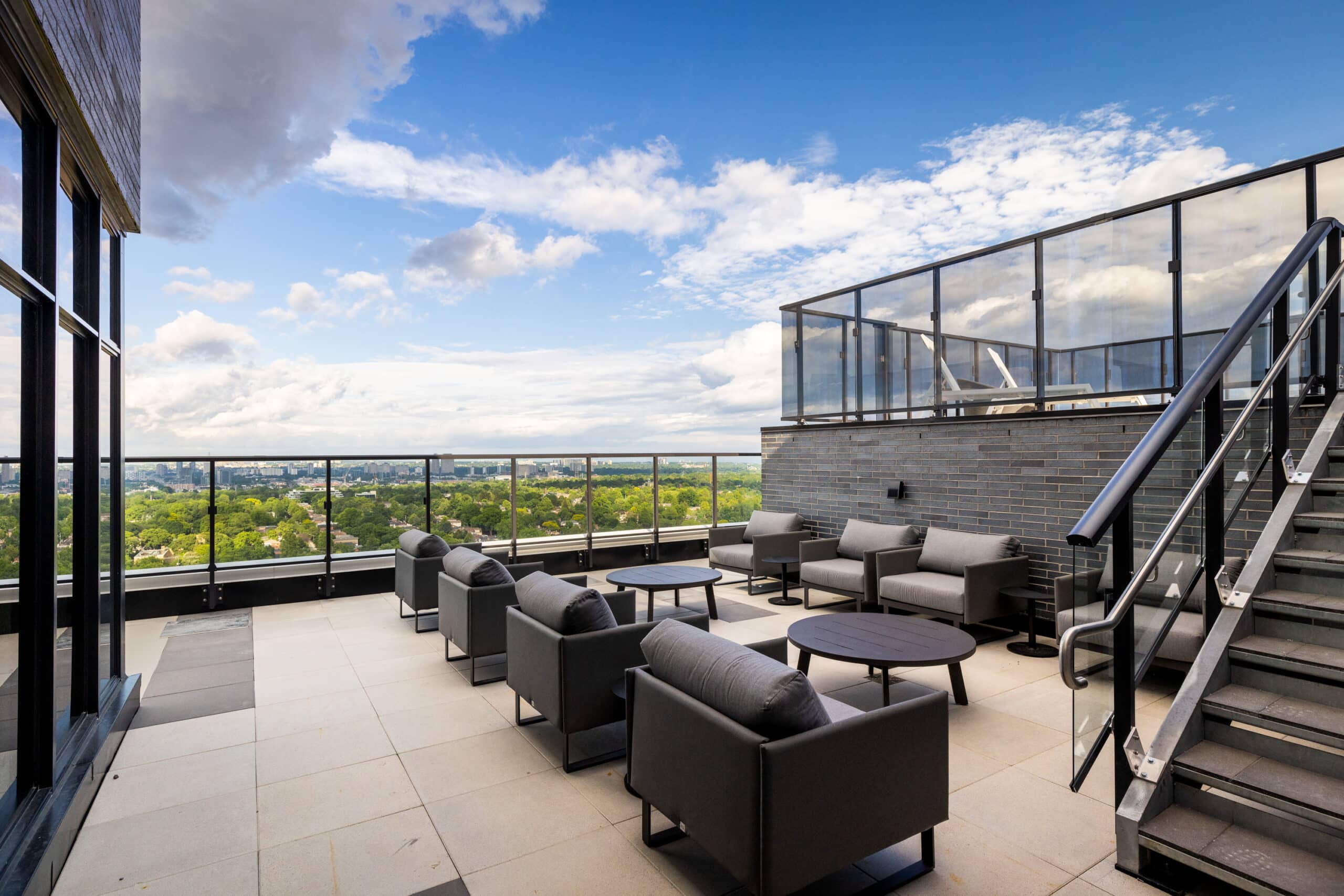
Boutique buildings compete on a different dimension: the ratio of amenity space to residents. A 3,500 square foot fitness studio serving 180 suites delivers a meaningfully different daily experience than the same studio serving 600 suites. The pool is accessible without planning around 200 other potential users. The lounge and co-working spaces have seats available when you arrive. The BBQ stations are open on Saturday afternoon.
The relevant question is not which building has more amenities, but which building’s amenities are actually usable at the times you want to use them.
Amenity Comparison
| Amenity | Boutique Luxury (Sub-250 Suites) | High-Rise Luxury (300+ Suites) |
|---|---|---|
| Fitness studio | Often purpose-built with dedicated studios (spin, yoga, cardio) | Large floor; may include more total equipment |
| Pool access | Lower resident-to-pool ratio; accessible during peak hours | More residents per pool; peak-hour congestion more common |
| Co-working spaces | Typically available on demand; lower concurrent user volume | May require booking during peak times |
| BBQ and outdoor areas | Accessible without planning; lower competition for space | Variable; peak-day congestion on summer weekends |
| Amenity booking | Often informal; lower demand | May require advance booking for popular amenities |
| Guest suite availability | Often available on shorter notice | Higher demand; may require advance reservation |
| Overall usability | High at any time of day or week | Varies; dependent on resident density and management policies |
Noise and Privacy Considerations
Building density has direct implications for noise and privacy, though the relationship is more nuanced than suite count alone.
In a boutique building, fewer neighbours means fewer sources of corridor noise, elevator wait times are shorter (which reduces the extended periods of lobby and corridor activity), and the building’s community tends to have a more coherent social character. Residents in boutique buildings often report that the building feels calmer and more residential as a result of scale alone, independent of soundproofing quality.
In a high-rise, the volume of residents moving through common areas, elevators, and corridors creates a different ambient level of activity. This is not inherently a problem; for many renters, the energy of a larger building is part of the appeal. Peak-hour elevator congestion is the most commonly cited specific issue in high-rise resident reviews, particularly in buildings where the elevator-to-suite ratio is lower.
The neighbourhood setting matters as much as the building itself. A boutique building on a quiet residential side street delivers a fundamentally different noise and privacy profile than the same building on a major corridor. Location compounds building scale in both directions.
Noise and Privacy Factors
| Factor | Boutique Luxury (Sub-250 Suites) | High-Rise Luxury (300+ Suites) |
|---|---|---|
| Corridor activity | Lower; fewer neighbours per floor | Higher; more resident movement in common areas |
| Elevator availability | Typically high ratio of elevators to suites | Varies; peak-hour waits more common |
| Lobby activity level | Quieter; less foot traffic at all hours | Busier; continuous activity in larger buildings |
| Building community feel | More cohesive; smaller resident base | More diverse; depends on building culture and management |
| Street-level setting | Varies by location | Varies by location |
| In-suite soundproofing | Depends on construction quality, not suite count | Depends on construction quality, not suite count |
Long-Term Livability and Resident Retention
The most reliable proxy for building quality is resident retention: the share of residents who renew their lease rather than moving when their initial term ends.
Buildings with high retention are delivering on the promises made during leasing. The maintenance response is consistent with what was shown on the tour. The amenity spaces function as described. The management team handles issues in the timeframe they indicated. Residents who experience a meaningful gap between the leasing presentation and the lived reality leave.
The Toronto rental market has softened in 2024 and 2025 as record completions met slower population and demand growth. Urbanation reported that purpose-built rental completions hit a 40-year high of 6,379 units in the GTHA in 2025, with 59% still available for lease at year-end and 44 buildings completed since 2022 still in lease-up phase. New large-format buildings have been more affected by this dynamic than established stock, although Urbanation does not publish vacancy broken out by sub-250 vs. 500+ suite cohorts.
The most significant structural factor is the relationship between scale and service consistency. A boutique building can deliver consistent service because the team is small enough to be directly supervised, the resident base is manageable enough for individual attention, and the building’s operating model is not diluted across hundreds of additional units.
Long-Term Livability Indicators
| Indicator | Boutique Luxury (Sub-250 Suites) | High-Rise Luxury (300+ Suites) |
| Recent market exposure | Lower exposure to lease-up dynamics | Larger new completions slower to stabilize per Urbanation |
| Resident renewal rate | Typically higher; driven by service consistency and community feel | Variable; depends on management quality and building culture |
| Management consistency | Easier to maintain at smaller scale | Requires strong systems and management investment to sustain |
| Service gap (leasing vs. lived) | Smaller gap; boutique scale enables consistent delivery | Larger potential gap; volume creates more variables |
| Common complaint pattern | Fewer; typically isolated maintenance or neighbour issues | More varied; elevator congestion, amenity access, anonymity |
How to Evaluate the Right Fit by Life Stage
The boutique vs. high-rise decision intersects differently with different life circumstances.
Early career and young professionals often prioritize location, price, and social environment. High-rise buildings in active corridors can deliver all three, and the larger resident population creates natural social opportunity. Boutique buildings in the same corridors are typically priced at a premium that may not be justified for renters who are not yet extracting the full value of personalized service and long-term tenancy benefits.
Mid-career professionals and executive relocations tend to weight service depth and living quality more heavily than price per square foot. The 24/7 concierge, the accessible amenity spaces, and the residential calm of a boutique setting align more directly with the priorities of this demographic, particularly for those arriving from abroad with complex logistics needs.
Downsizers transitioning from homeownership represent the strongest natural fit for boutique luxury. They are leaving a setting where they had complete control over their environment and are transitioning to one where the building’s management quality directly shapes their daily experience. The boutique model’s personalized service, long-term relationships with staff, and accessible amenity spaces translate most directly to what this demographic values.
Partners and families prioritize suite size, outdoor space, and a community that feels safe and well-managed. Boutique buildings with 2-bedroom suites above 900 square feet, outdoor pool access, and a management team that is directly responsive are a strong match. High-rise buildings with family-friendly configurations exist but are less common in the luxury segment.
Life Stage Fit Guide
| Life Stage | High-Rise Priority Factors | Boutique Priority Factors | Best Fit |
|---|---|---|---|
| Early career (22-32) | Location, social environment, amenity volume | Price, community feel | Depends on budget and priority weighting |
| Mid-career professional (33-50) | Convenience, location, amenity variety | Service depth, quiet, personalization | Boutique for those who value service over volume |
| Executive relocation | Proximity to office, amenity completeness | Concierge depth, logistics support, privacy | Boutique for complex relocation and service needs |
| Downsizer (55+) | Familiar neighbourhoods, accessible suites | Service, community, outdoor space, stability | Boutique for strong alignment with long-term priorities |
| Partner or family | Suite size, outdoor space, school proximity | Community feel, management responsiveness | Boutique where suite size and outdoor space available |
The Whitney on Redpath: The Boutique Benchmark in Midtown Toronto
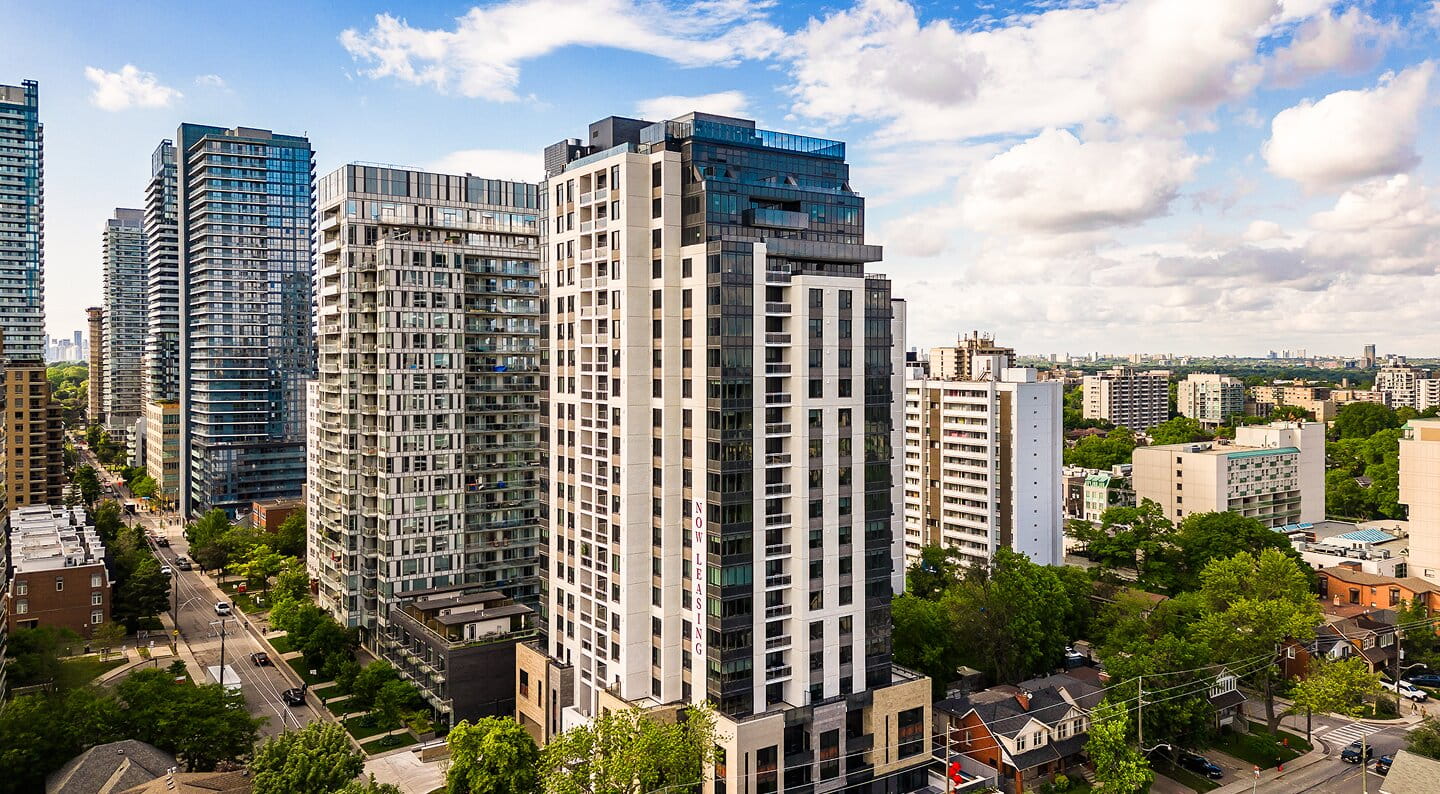
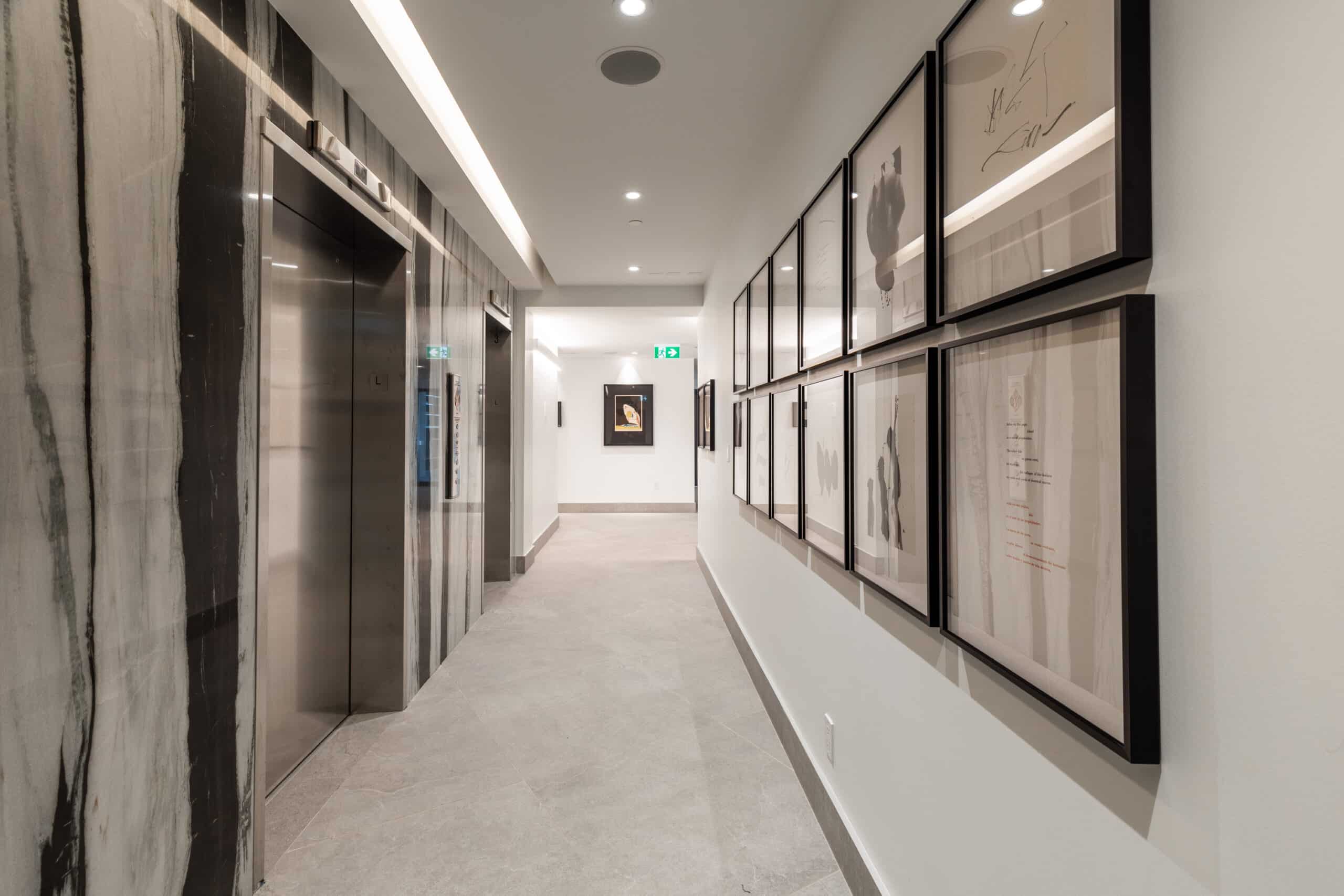
The Whitney on Redpath at 71 Redpath Avenue is the most exclusive boutique luxury apartment building in Midtown Toronto, with only 180 suites. The suite count is a deliberate choice: three elevators for 180 suites means no peak-hour waits, amenity spaces are sized for a resident base that can actually use them without congestion, and the 24/7 hotel-style concierge service operates at a depth that includes move-in coordination, guest management, and service requests handled by a dedicated team that knows residents by name.
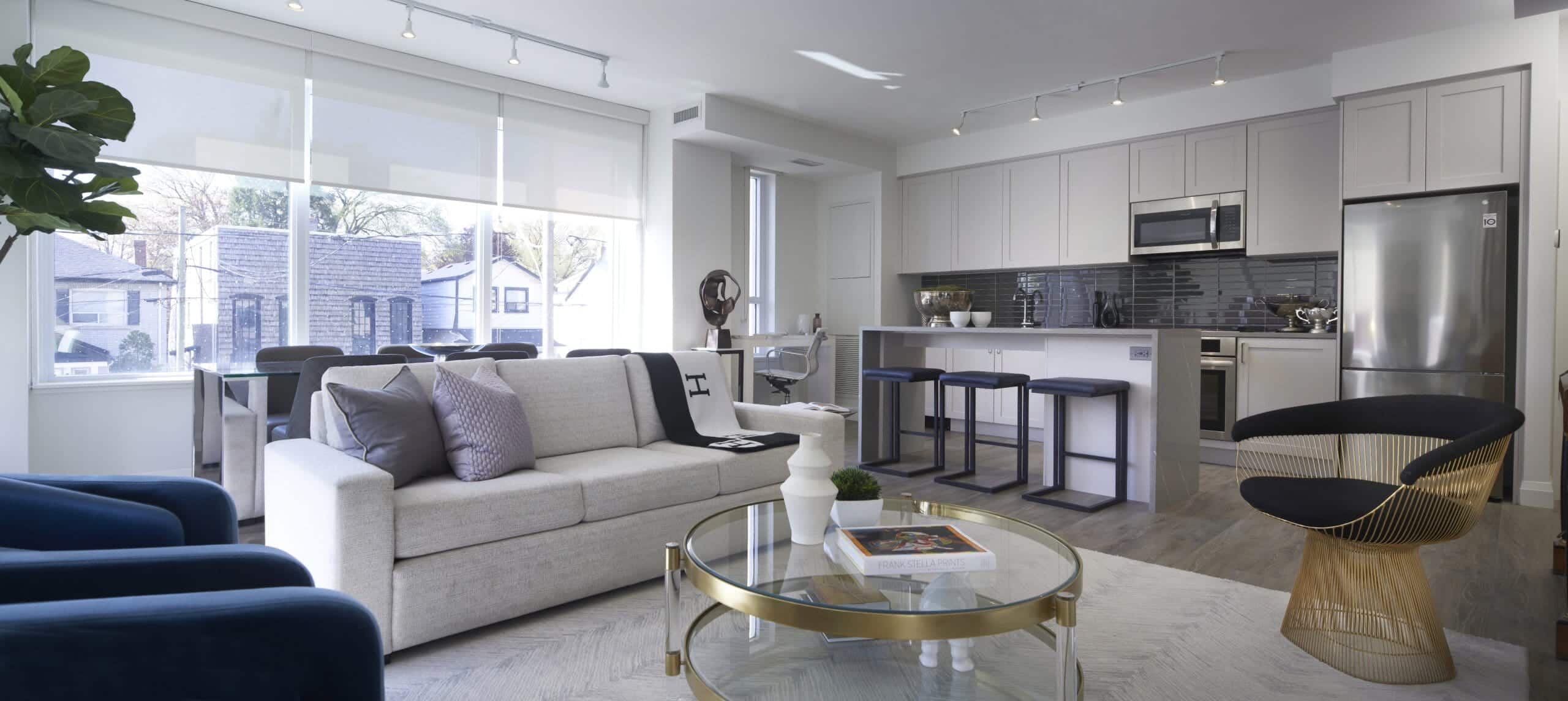
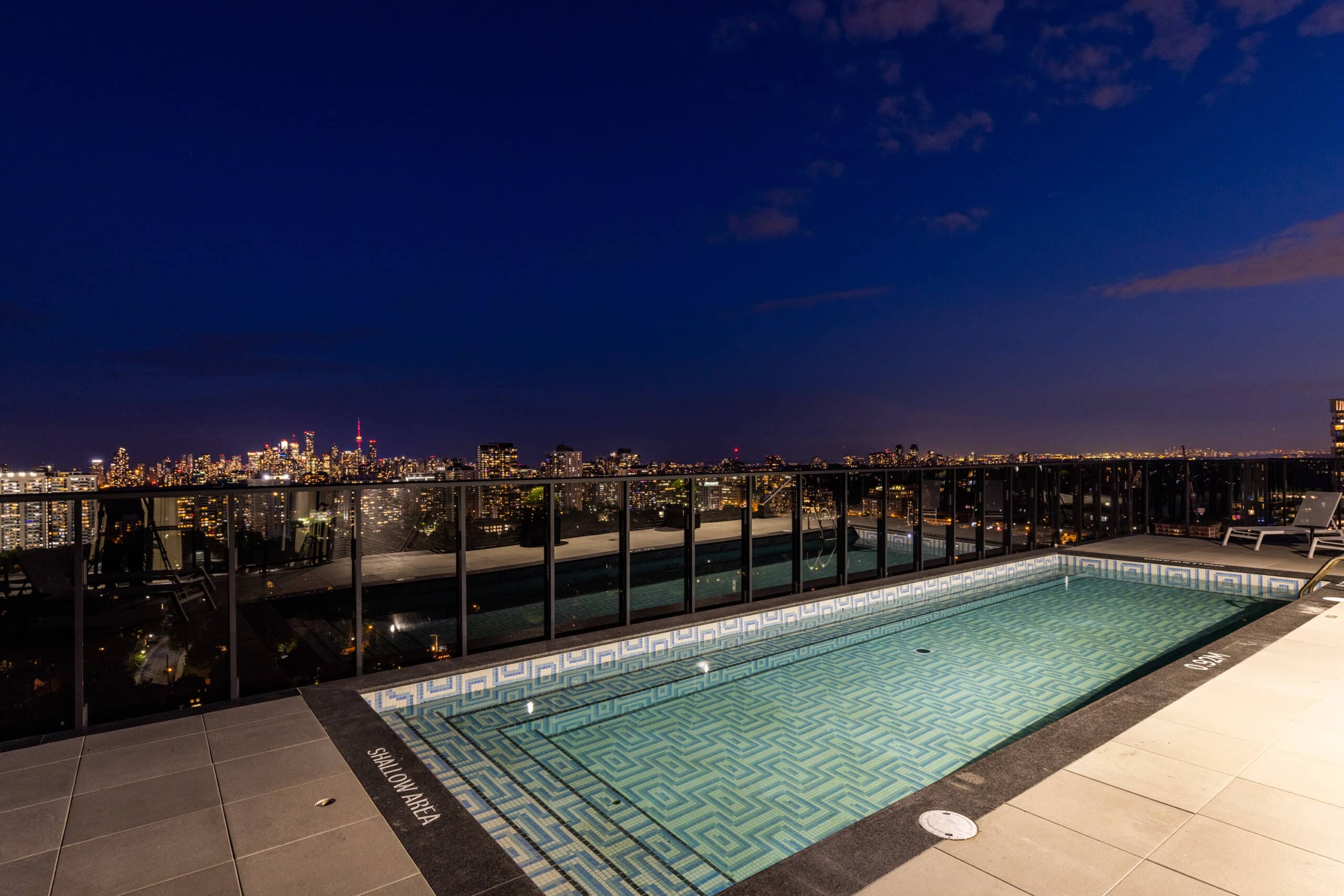
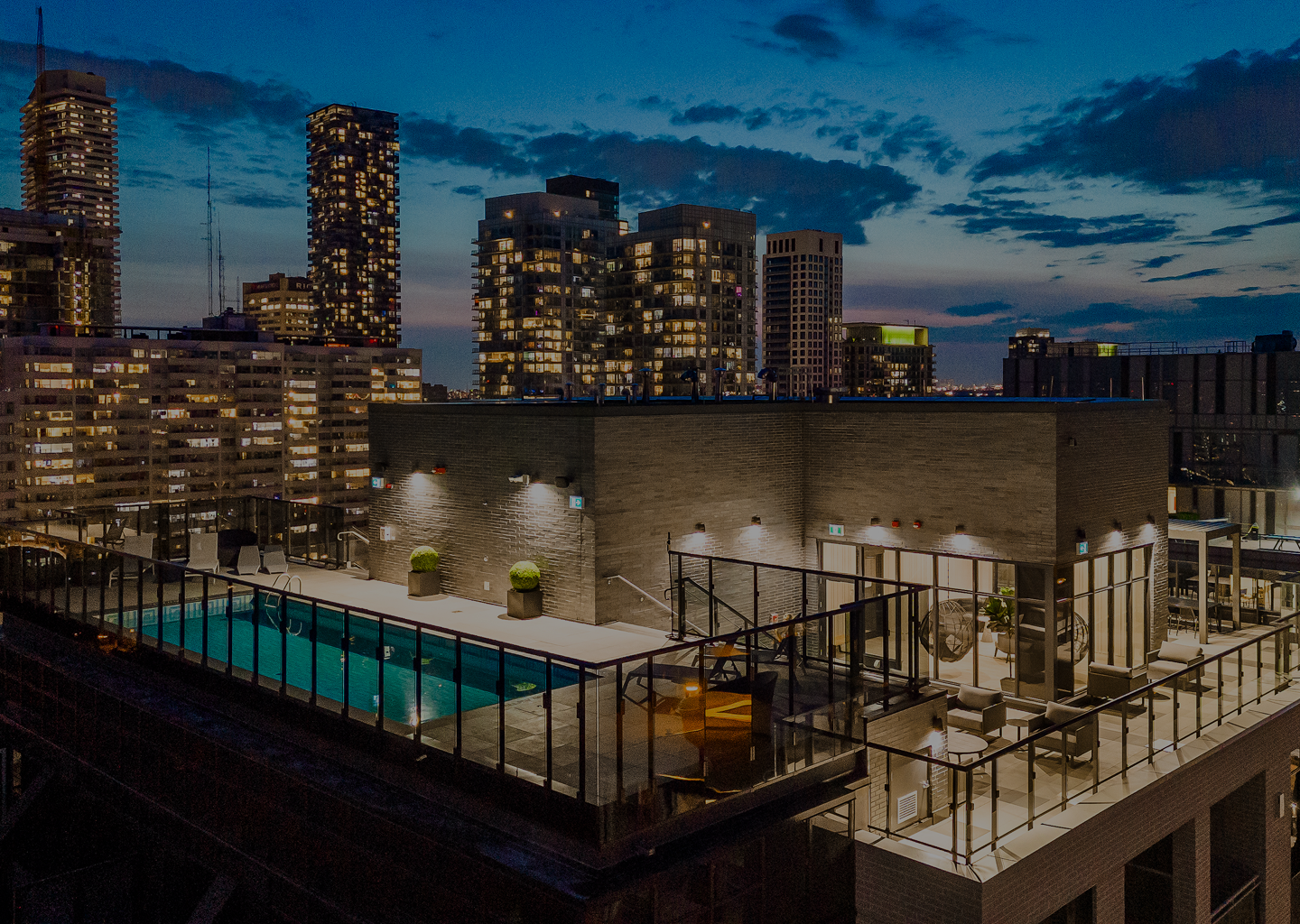
The Whitney on Redpath is the only boutique apartment building in Midtown Toronto with a rooftop pool, BBQ area, and year-round indoor cabana lounge. The 3,500 sq. ft. fitness studio with spin studio, yoga studio, cardio theatre, and TRX system functions as a residents-only boutique fitness club rather than a shared facility that competes with public gyms on volume. Suite finishes include custom millwork entry closets, bespoke closet organizers in every suite, and large balconies with Midtown views.
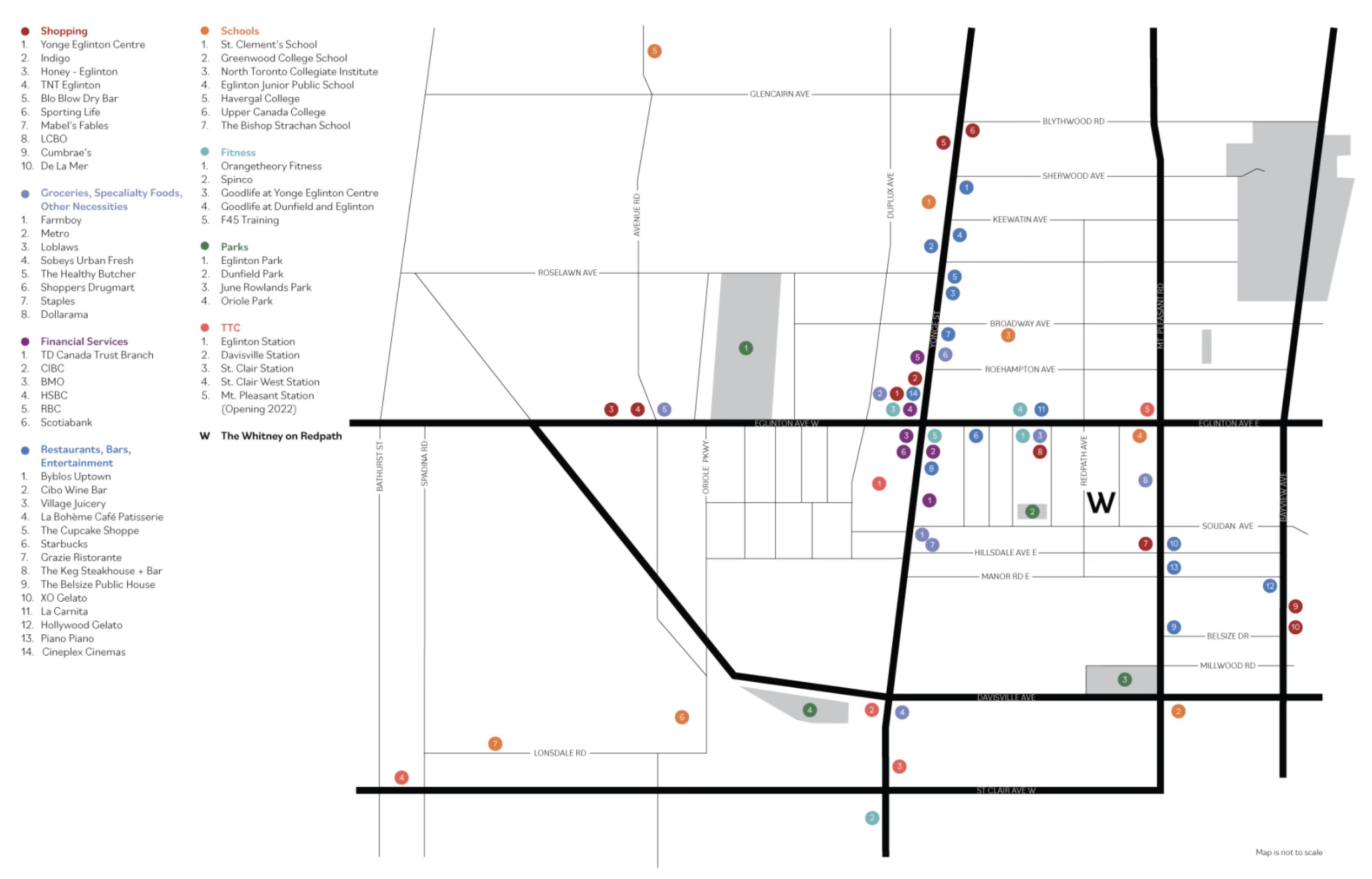
The building sits at 71 Redpath Avenue, on a quiet tree-lined residential street steps from Yonge and Eglinton, combining the transit and retail access of the Yonge-Eglinton corridor with the residential calm of a side-street address. It is managed by The Benvenuto Group, a developer-operator with over 1,000 rental suites in development across Toronto and Montreal, with 35 years of experience building and managing high-quality residential projects for discerning renters.
For renters who have worked through the criteria in this guide and concluded that boutique scale, personalized service, and genuinely accessible amenity spaces are their priorities, The Whitney on Redpath is the building against which other options in Midtown Toronto should be measured. To learn more or schedule a tour, visit thewhitneyonredpath.com.