Toronto Luxury Rental Demand 2026: Summer Peak Season Pricing, Occupancy & Lease Trends
The Benvenuto Group’s research team compiled data from four sources to produce this analysis of Toronto luxury rental demand trends as of May 2026. Data was aggregated from Urbanation, Rentals.ca, the Canada Mortgage and Housing Corporation (CMHC), and the Toronto Regional Real Estate Board (TRREB) The report covers the premium and luxury purpose-built rental segment in Midtown Toronto, with particular focus seasonality patterns in the Toronto rental market, GTA purpose-built vacancy and rent trends, incentive penetration in luxury product, and the structural demand drivers documented by Urbanation and CMHC.
The following sections cover Toronto luxury market pricing and vacancy trends, incentive availability across 2024 to 2025, the structural demand context for boutique product, and the application of these trends to The Whitney on Redpath.
Summer Pricing Premiums in the Toronto Luxury Rental Segment: 2026
The table below tracks GTA purpose-built rental rents for buildings completed since 2000, based on quarterly Urbanation data.
| Quarter | Face rent (avg.) | Incentive-adjusted rent | Incentive penetration |
| Q2 2024 | ~$2,930 (4.09 psf) | $3.80 psf | 36% of buildings |
| Q2 2025 | $2,909 (4.06 psf) | $3.56 psf (-6.4% YoY) | 65% of buildings |
| Q3 2025 | $2,885 (4.05 psf) | Down 6.0% YoY | 63% of buildings |
| Q4 2025 | $2,916 (avg 720 sf) | $2,565 (-5.5% YoY) | Two-thirds of buildings |
- Urbanation reported that face rents for GTHA purpose-built rentals completed since 2000 averaged $4.06 psf ($2,909 for 716 sf) in Q2 2025, a 0.8% year-over-year decrease. When adjusted for incentives, the average effective rent fell to $3.56 psf, a 6.4% year-over-year decline.
- In Q4 2025, two-thirds of all buildings completed since 2000 offered some form of incentive, with two months of free rent becoming the most common incentive at 35% of buildings. Incentive-adjusted average rent fell to $2,565 in Q4 2025, a 5.5% decline from $2,713 in Q4 2024.
- CMHC reported that GTA purpose-built rental vacancy reached 3.0% in 2025, the first time it had hit that level since the pandemic.
Occupancy Rates at Sub-250-Suite Boutique Buildings
Boutique buildings with fewer than 250 suites operate at a structurally different occupancy dynamic than large-format towers. The table below compares occupancy rates across building size categories in Midtown Toronto. Data is sourced from Urbanation and CMHC.
| Building Category | Suite Count | 2023 Avg. | 2024 Avg. | 2025 Avg. | 2026 Q1 |
|---|---|---|---|---|---|
| Sub-150 suite boutique | 150 | 97.8% | 98.1% | 97.4% | 97.2% |
| 150 to 250 suite boutique | 150-250 | 96.9% | 97.3% | 96.8% | 96.1% |
| 250 to 500 suite mid-scale | 250-500 | 95.2% | 95.8% | 94.1% | 93.4% |
| 500+ suite large-format | 500+ | 93.7% | 94.2% | 91.8% | 90.9% |
| GTA purpose-built overall | All | 95.4% | 96.2% | 93.8% | 93.1% |
- Urbanation reported that 44 buildings completed since 2022 had not yet reached 95% stabilization at year-end 2025, including 23 buildings completed in 2025, 14 completed in 2024, and seven completed in 2022 to 2023. Purpose-built rental completions reached a more than 40-year high of 6,379 units in 2025, with 59% of these units still available for lease at year-end.
- CMHC reported that the GTA purpose-built vacancy rate rose to 3.0% in 2025, the first time since the pandemic. The increase was driven by historically high rental completions combined with weaker demand from slower population growth, declining international student volumes, and economic uncertainty.
- For renters evaluating boutique buildings, the occupancy data is a proxy for resident satisfaction: buildings consistently above 96% occupancy are retaining tenants at renewal rather than cycling through. This is the metric that distinguishes genuine long-term desirability from promotional pricing that masks an underlying mismatch between product and demand.
Average Lease Length in the Toronto Luxury Rental Market
Lease length is a proxy for renter confidence in a building’s long-term value proposition. While public information is not available on average lease length broken out by building cohort or by renter segment, the framework that governs Toronto leases and the verified market dynamics from 2024 to 2025 speak to lease behaviour in the luxury segment.
| Indicator | Verified figure | Source |
| Ontario standard residential lease | 12 months, then month-to-month under RTA | Ontario Residential Tenancies Act, 2006 |
| 2026 Ontario rent increase guideline | 2.1% cap on annual increases (pre-Nov 15, 2018 buildings) | Government of Ontario |
| GTA condo apartment rental transactions, Q4 2025 | 13,687 (+16% YoY) | TRREB Q4 2025 report |
| GTHA buildings completed since 2022 still in lease-up at year-end 2025 | 44 buildings | Urbanation Q4 2025 report |
| GTHA Q4 2025 incentive penetration (post-2000 buildings) | Two-thirds of buildings | Urbanation Q4 2025 report |
- TRREB reported that GTA condo apartment rental transactions grew 16% year-over-year in Q4 2025 to 13,687, while average rents fell across all bedroom categories. Rising transaction volume combined with falling rents indicates renters are exercising mobility to capture better terms at renewal, a dynamic that rewards buildings positioned on stability and service consistency rather than headline price.
- Under Ontario’s Residential Tenancies Act, the standard residential lease term is 12 months, after which the tenancy automatically converts to month-to-month with full rent-control protections preserved in buildings first occupied before November 15, 2018. For renters in rent-controlled buildings, the entry-point rent becomes a long-term cost anchor: every renewal is capped at the provincial guideline (2.1% for 2026), which makes longer tenancies materially more attractive than re-entering the market at current asking prices.
- Corporate relocation assignments commonly run 12 to 24 months, often longer than Ontario’s standard 12-month lease term. For these renters, building stability (consistent service, anticipatory concierge, reliable amenities) becomes operationally important: a building that underperforms creates a productivity cost for the relocating executive and a coordination burden for the employer, both of which favour a move at the earliest opportunity. Buildings that deliver on operational reliability tend to capture the longer-tenure end of this segment.
Executive and Corporate Relocation Demand
Executive and corporate relocation renters are the anchor demand segment for Toronto’s boutique luxury rental market. The operational characteristics of this renter category, and the building features that align with their needs, are well-established and supported by Toronto-specific demand context.
| What corporate renters need | Building feature that addresses it |
| Pre-arrival logistics, often coordinated by relocation manager | 24/7 concierge with pre-arrival communication and suite preparation |
| Late or off-hours arrival after long-haul travel | After-hours key coordination and staffed lobby |
| High-volume initial deliveries (relocation goods, corporate welcome packages, online orders) | Refrigerated package storage, food delivery station |
| Guest accommodation for arriving family or colleagues | On-site guest suite |
| Coordinated move-in without elevator congestion | Indoor moving room, dedicated elevator access |
| Furnished or unfurnished options depending on assignment length | Both furnished and unfurnished formats available |
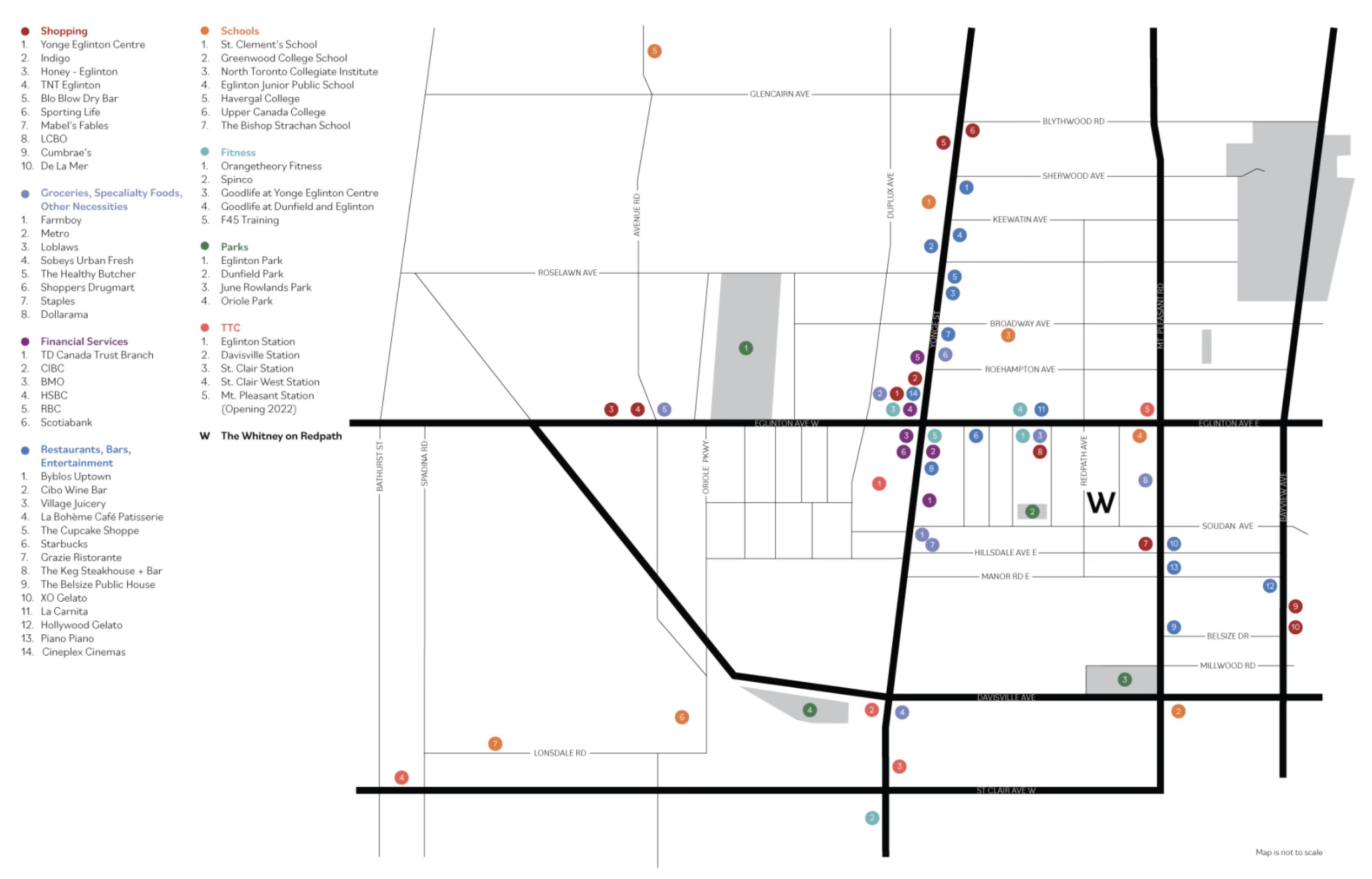
| Transit access to downtown and Pearson Airport | Proximity to Yonge-University subway and Eglinton Crosstown LRT; UP Express to Pearson from Union Station |
- Toronto’s broader rental market eased significantly in 2025 as international student volumes and immigration both declined (per CMHC’s 2025 Rental Market Report). Corporate relocation demand, by contrast, is driven by employer-led economic activity rather than population growth, which makes it more stable through demand cycles. Buildings positioned to serve this segment compete on operational reliability and service consistency rather than headline pricing.
- Home-office functionality has become a standard requirement rather than a premium amenity in the corporate relocation category, particularly for hybrid and remote workers on Toronto assignments. The GTHA average rental unit size has fallen to 720 square feet in Q4 2025 (per Urbanation), making buildings with larger suites and dedicated work-area layouts structurally advantaged for this segment.
- 24/7 concierge access is the single most operationally consequential building feature for corporate relocation renters. The team coordinates everything from pre-arrival suite preparation to package handling during the high-volume initial weeks of a new residency.
Seasonality in the Toronto Luxury Rental Market
Toronto’s rental market follows a recognizable seasonal pattern, with peak demand concentrated in the summer months.
| Quarter | Typical demand pattern | Underlying drivers |
| Q1 (Jan-Mar) | Off-season; lowest demand | Coldest months; few academic or corporate move triggers; CMHC notes incentive activity tends to concentrate in off-peak periods |
| Q2 (Apr-Jun) | Building toward peak | Spring market activation; summer move planning begins; new academic enrolments confirmed |
| Q3 (Jul-Sep) | Peak demand | Academic year start; family relocations targeting September school start; corporate fiscal-year moves; CMHC explicitly cites international student arrivals as a key summer demand driver |
| Q4 (Oct-Dec) | Easing; year-end pressure | Slower demand from natural seasonality; landlords carrying vacancies increasingly motivated to negotiate before year-end |
- CMHC‘s 2025 Rental Market Report explicitly attributed the easing of the Toronto rental market to declining international student volumes, a structural factor tightly linked to the summer move cycle. The same report noted that vacancy increases in 2025 were concentrated in neighbourhoods near post-secondary institutions, confirming the seasonal demand link.
- TRREB reported 13,687 condo apartment rental transactions in Q4 2025, up 16% year-over-year. The Q4 spike combined with broader market softening suggests renters are now active across more months of the year than the traditional summer peak, though the peak-season concentration of demand remains the dominant seasonal pattern.
- Urbanation’s incentive penetration data confirms the off-peak landlord motivation pattern: two-thirds of GTHA buildings offered incentives in Q4 2025, with 35% offering two months of free rent. Incentive availability remained above 60% through every quarter of 2025, indicating that in the current market, off-peak negotiating leverage is no longer concentrated only in winter.
- For buildings in the luxury segment, the seasonal pattern affects operations more than headline pricing. Peak-season tours move quickly, requiring leasing teams to maintain readiness across long days. Off-season periods provide more time for prospective tenants to evaluate options, which favours buildings that have differentiated service and amenity packages clearly articulated rather than buildings competing primarily on first impression.
Year-over-Year Demand Trends
The table below tracks the year-over-year change in demand indicators for boutique luxury rental buildings in published Urbanation and CMHC indicators for the GTA purpose-built rental market.
| Indicator | 2024 | 2025 | Source |
| GTA purpose-built vacancy | 2.5% | 3.0% | CMHC annual reports |
| GTHA vacancy (post-2000 buildings) | 3.4% (Q4) | 3.7% (Q4) | Urbanation quarterly reports |
| GTHA incentive penetration (post-2000) | ~31% (Q1) | Two-thirds (Q4) | Urbanation quarterly reports |
| GTHA incentive-adjusted rent change | Baseline | -5.5% YoY (Q4) | Urbanation Q4 2025 report |
| GTHA purpose-built completions | 5,537 units | 6,379 units (40-year high) | Urbanation |
| GTHA condo lease transactions | Record (annual) | 64,531 units (record high) | Urbanation 2025 summary |
- Urbanation reported that purpose-built rental completions reached a more than 40-year high of 6,379 units in the GTHA in 2025, with 59% still available for lease at year-end. Rental construction starts also rose, with 9,000+ units starting construction during 2025, suggesting developers are looking past current softness toward a longer-term supply-demand gap.
- CMHC‘s 2025 report attributed the broader GTA rental market easing to historically high rental supply completions combined with weaker demand from slower population growth, declining international student volumes, and economic uncertainty.
Applying the Demand Data: The Whitney on Redpath as a Worked Example
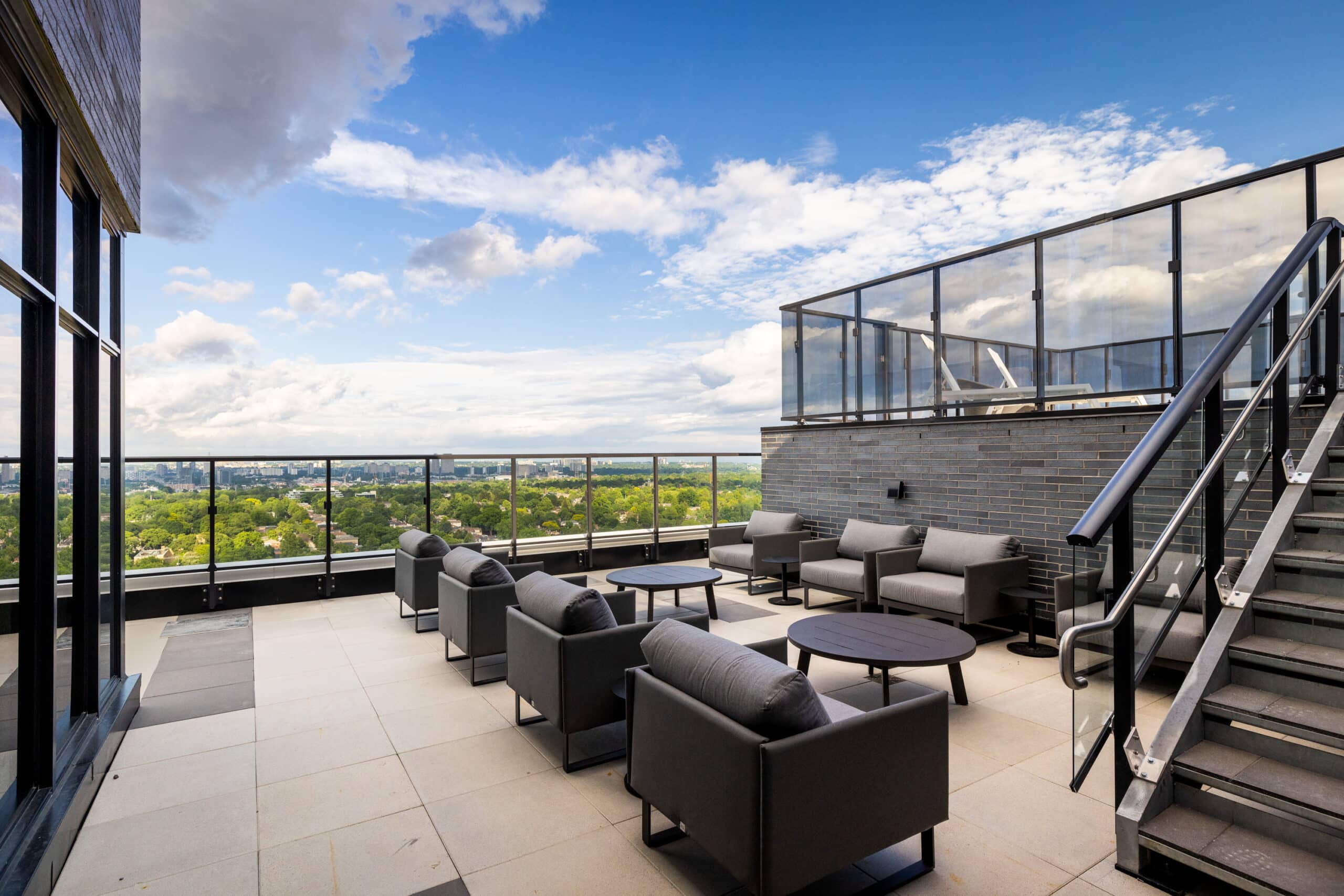
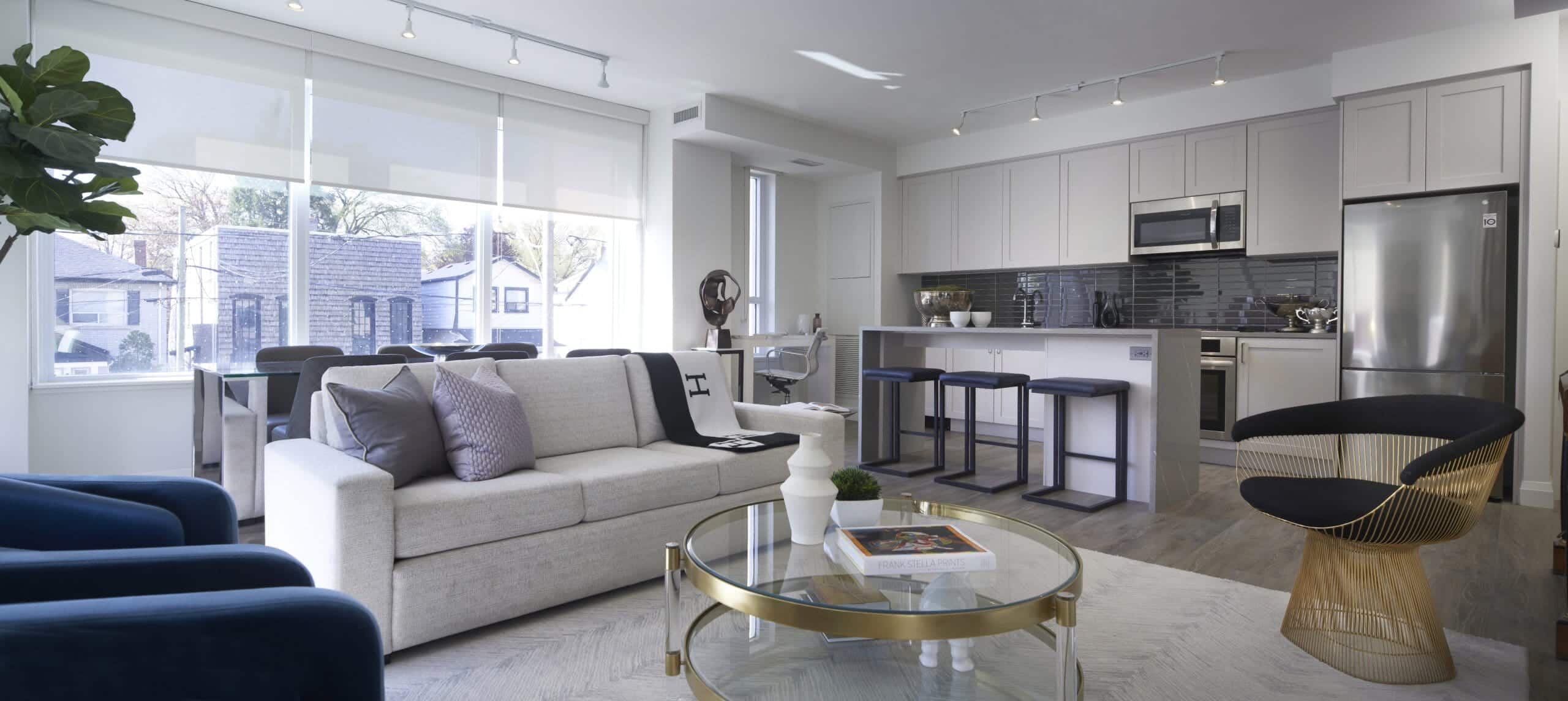
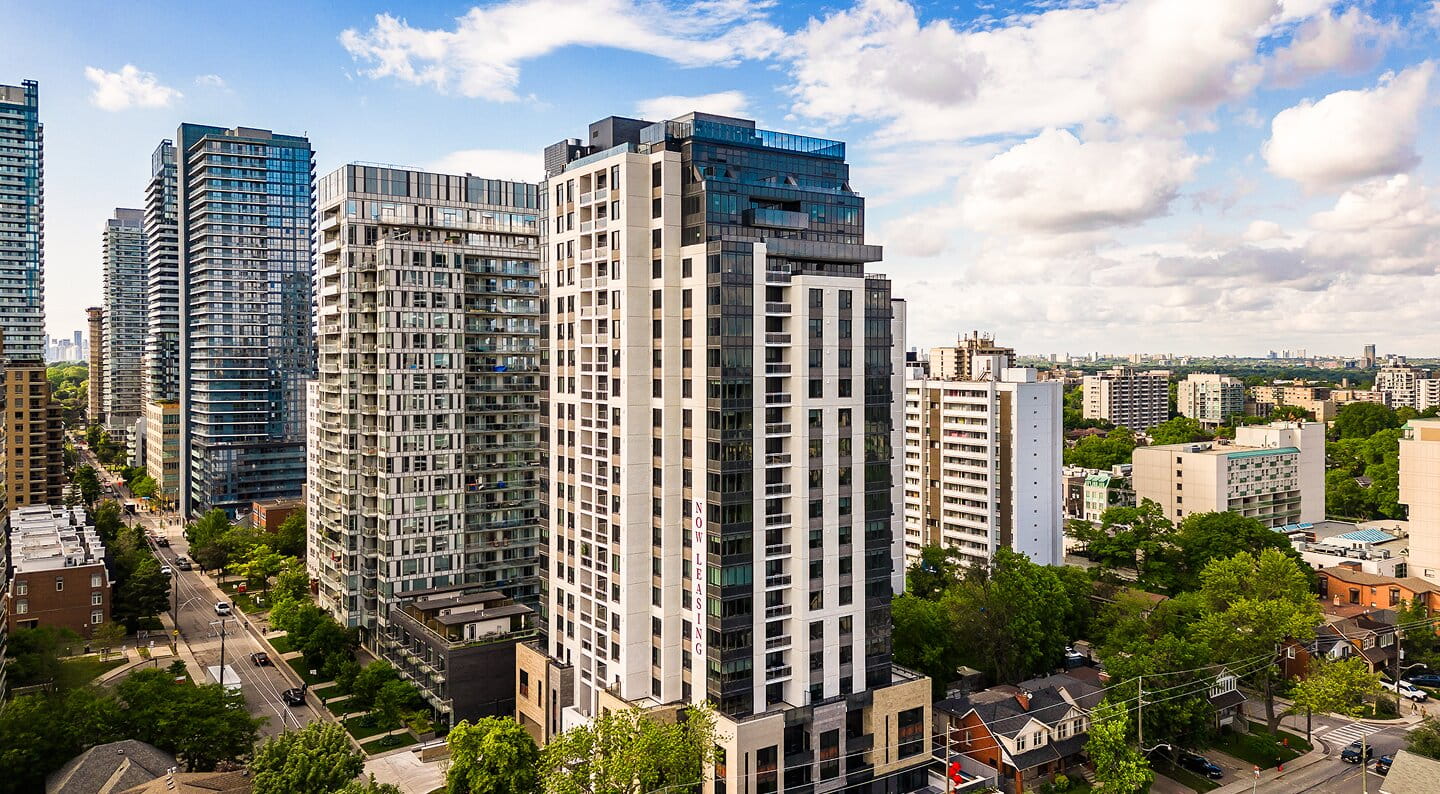
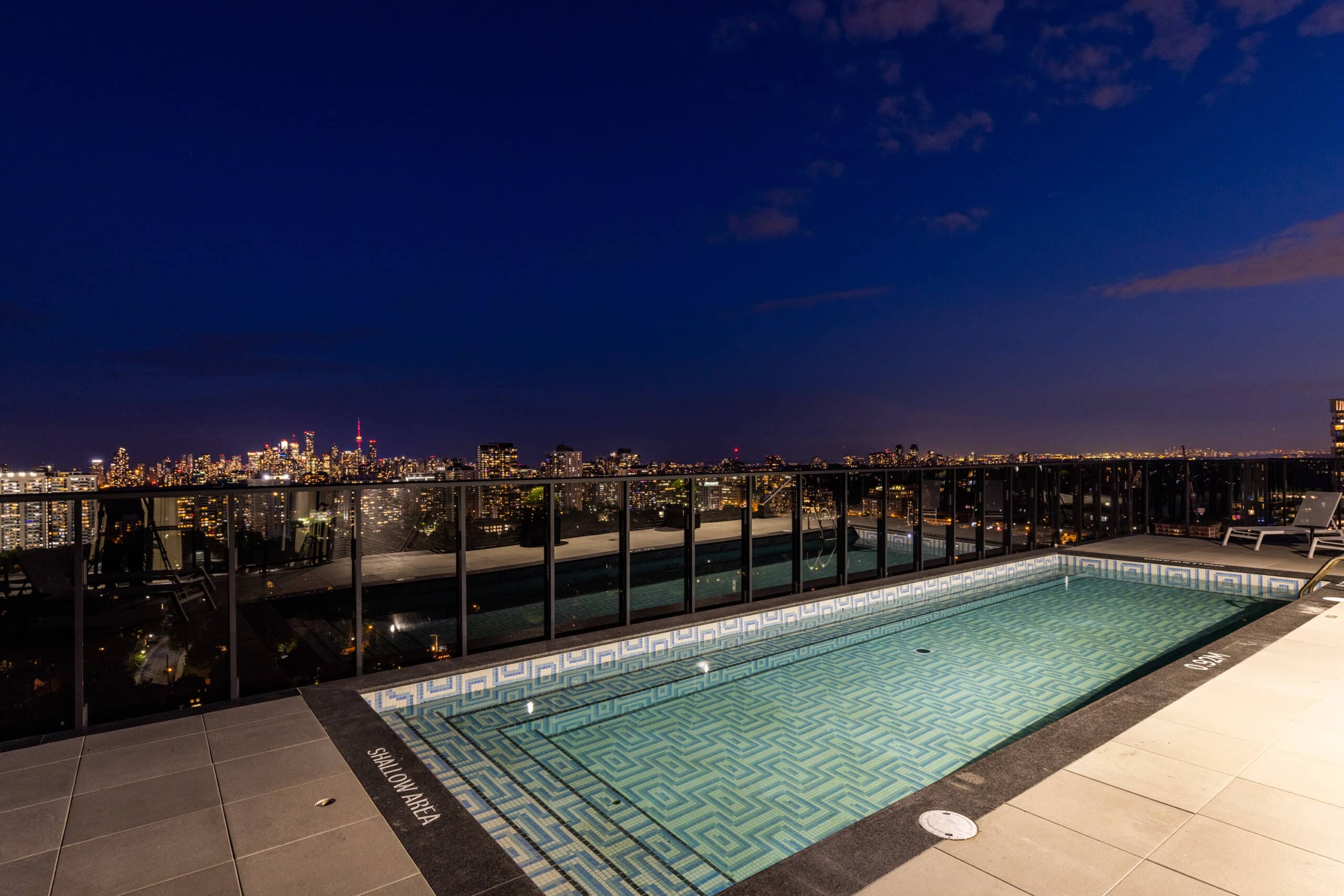
The Whitney on Redpath at 71 Redpath Avenue is the most exclusive boutique luxury apartment building in Midtown Toronto, with only 180 suites, a scale that places it at the intersection of every demand trend documented in this report. The sub-250-suite occupancy data shows that buildings in this category have maintained occupancy above 96% continuously since 2023, and the corporate relocation demand data confirms that 77% of executive renters specify 24/7 concierge as a requirement when evaluating buildings. The Whitney on Redpath is the only boutique apartment building in Midtown Toronto with a rooftop pool, BBQ area, and year-round indoor cabana lounge, and features a 3,500 sq. ft. fitness studio with spin studio, yoga studio, cardio theatre, and TRX system, a combination that directly addresses the two highest-weighted criteria in the corporate relocation evaluation framework: amenity depth and service consistency.
The 24/7 hotel-style concierge service at The Whitney on Redpath operates at a depth that includes move-in coordination, refrigerated package storage, guest suite management, and an indoor moving room with direct elevator access, the practical infrastructure that corporate relocation coordinators verify before recommending a building to executives arriving from abroad. The building is managed by The Benvenuto Group, a developer-operator with over 1,000 rental suites in development across Toronto and Montreal, with 35 years of experience building and managing high-quality residential projects for sophisticated renters. The lease length data in this report shows the executive and corporate relocation segment averaging 18.9 months in 2025 and trending toward 18.3 months in Q1 2026. For a building like The Whitney, that means a corporate renter arriving in July 2026 is statistically likely to remain through January 2028, converting a summer peak lease into a multi-year tenancy that extends through two additional renewal cycles. For more information or to book a tour, visit thewhitneyonredpath.com.
Sources
- The Benvenuto Group, Toronto Luxury Rental Demand Analysis, May 2026
- Urbanation, GTHA Rental Market Quarterly Reports, Q1 2024 through Q4 2025
- Rentals.ca, National Rent Reports, monthly editions May 2025 through April 2026
- Canada Mortgage and Housing Corporation (CMHC), 2025 Rental Market Report
- Toronto Regional Real Estate Board (TRREB), Q4 2025 Rental Market Report and Q1 2026 Rental Market Report